
Account
Discount up to 35% for first purchase only this month.
Account

Whole Melt is a term cannabis enthusiasts may encounter when researching concentrates, live resin, and full-melt products. But what does Whole Melt actually mean, and how does it differ from other cannabis extracts?
From extraction methods and terpene preservation to texture, storage, and the differences between live resin and live rosin, understanding the basics can make it easier to evaluate cannabis concentrates and interpret product descriptions.
1. What Does Whole Melt Mean?
“Whole melt” generally refers to a concentrate or hash product valued for its ability to melt cleanly when heated. The term is particularly associated with high-quality hash and solventless concentrates where the goal is to retain desirable trichome heads while minimizing unwanted plant material.
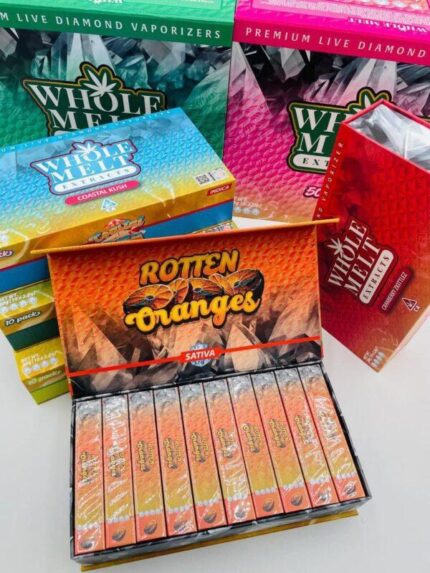
The term Whole Melt can also be used as a product or brand name, so its exact meaning can depend on the context in which it appears.
For consumers researching Whole Melt products, it is important to look beyond the name itself and consider factors such as extraction method, laboratory testing, cannabinoid content, terpene information, and the laws that apply where the product is located.
2. How Is Live Resin Made?
Live resin is different from many traditional cannabis concentrates because freshly harvested cannabis is typically frozen soon after harvest rather than being dried and cured first.
Freezing the plant material helps preserve volatile compounds, including terpenes, that can change or diminish during conventional drying and curing.
Depending on the product, live resin may be produced using hydrocarbon extraction methods or other extraction processes. The finished concentrate can have a range of textures, colors, aromas, and cannabinoid profiles.
This is one reason the term live resin concentrate covers a fairly broad category of products.
3. Whole Melt vs. Live Resin: Are They the Same?
Not necessarily.
Live resin describes a type of concentrate associated with freshly frozen cannabis and terpene preservation. Whole melt, on the other hand, commonly describes a melting characteristic or a type of hash/concentrate associated with clean melting behavior.
In other words, the terms can describe different characteristics of a concentrate.
A product can be discussed in terms of its extraction method, starting material, texture, melting behavior, cannabinoid profile, and terpene content. Looking at all of these characteristics provides a more useful picture than relying on a product name alone.
4. Whole Melt vs. Live Rosin
One of the most common comparisons in the concentrate world is Whole Melt vs. live rosin.
Live rosin is a solventless concentrate generally produced from fresh-frozen cannabis through processes involving ice-water separation followed by heat and pressure. Because solvents aren’t used during extraction, live rosin is often categorized as a solventless concentrate.
Whole melt products may also be associated with solventless hash, depending on the specific product.
The important distinction is that “whole melt” describes a type or characteristic of concentrate, while “live rosin” describes a particular extraction approach.
5. Why Do Terpenes Matter?
Terpenes are naturally occurring aromatic compounds found in cannabis and many other plants. They contribute to the aroma and flavor profile of cannabis varieties and concentrates.
Live concentrates are often valued for their terpene profiles because processing freshly harvested material can help preserve volatile compounds.
When researching Whole Melt or other cannabis concentrates, useful information can include:
- Total cannabinoid content
- Individual cannabinoid percentages
- Terpene profile
- Extraction method
- Moisture or water activity where applicable
- Laboratory testing information
- Production or packaging information
A detailed product profile can tell you considerably more than appearance alone.
6. What Does High-Quality Concentrate Look Like?
Appearance can provide clues, but it should not be treated as proof of quality.
Cannabis concentrates can vary considerably in color and texture depending on the cultivar, extraction technique, processing conditions, and storage.
Depending on the concentrate, you may encounter textures described as:
- Sauce
- Badder or batter
- Crumble
- Hash
- Full melt
- Live resin
- Live rosin
Instead of judging quality solely by color or consistency, look for reliable information about how the concentrate was produced and whether appropriate laboratory testing is available.
For regulated cannabis markets, independent testing can provide information about cannabinoid potency and potential contaminants.
7. How Should Cannabis Concentrates Be Stored?
Storage can have a significant effect on the characteristics of cannabis concentrates.
Heat, light, oxygen, and repeated temperature changes can affect cannabinoids and volatile aromatic compounds over time.
For general preservation, concentrates are typically kept:
- In an appropriate airtight container
- Away from direct sunlight
- Away from excessive heat
- Protected from unnecessary exposure to air
- According to the manufacturer’s storage instructions
Avoid repeatedly opening and closing a container unnecessarily, particularly when preserving terpene-rich concentrates.
Always follow the storage instructions supplied with a legally purchased product.
8. Why Are Whole Melt and Other Concentrates Considered Premium?
Terms such as Whole Melt, “full melt,” “live resin,” and “live rosin” are frequently associated with higher-end cannabis concentrates, but the terminology alone does not guarantee quality.
Premium positioning can reflect several factors, including:
- Starting material
- Cultivar selection
- Harvest timing
- Extraction technique
- Trichome preservation
- Terpene retention
- Processing expertise
- Laboratory testing
- Packaging and storage
For that reason, consumers researching cannabis concentrates should evaluate the complete product information rather than assuming that a particular label automatically means superior quality.
9. What Should You Know About Cannabis Concentrate Laws?
Cannabis laws vary significantly between jurisdictions.
In the United States, cannabis regulations differ from state to state, including rules concerning possession, manufacturing, testing, packaging, and sales. In Canada, cannabis is federally regulated, with additional provincial and territorial rules affecting how cannabis products are distributed and sold.
This means that a cannabis concentrate that is legally available in one location may be subject to different requirements elsewhere.
Before purchasing or possessing a cannabis concentrate, check the current regulations that apply to your specific jurisdiction and use products only through lawful channels.
Whole Melt and Cannabis Concentrates: Key Takeaways
Whole Melt is a term that can refer to melting characteristics, solventless hash, or a particular product or brand depending on context. It should not automatically be treated as a synonym for live resin or live rosin.
If you’re researching Whole Melt, whole melt hash, full melt, live resin, or live rosin, pay attention to the details behind the label. Extraction method, terpene profile, cannabinoid content, laboratory testing, storage, and local regulations are all important parts of understanding a concentrate.
Most importantly, product terminology can vary between producers and markets. Reliable testing information and clear labeling are more useful indicators than marketing language alone.
“`Signup our newsletter to get update information, news, insight or promotions.
Latest article
Related Article
August 24, 2026
No Comments
August 24, 2026
No Comments
August 24, 2026
No Comments